


Strategy's credit risk falls as preferred equity value surpasses convertible debt

Credit risk at Strategy (MSTR) eased as the notional value of its perpetual preferred equity overtook its outstanding convertible debt, reducing maturity and refinancing concerns tied to its bitcoin (BTC) accumulation strategy.
The aggregate value of the perpetual preferred equity stands at $8.36 billion, surpassing the $8.2 billion of outstanding convertible debt, the company's dashboard showed Thursday.
The growing dominance of preferred equity points to a more stable capital structure with reduced credit volatility. Convertible bonds introduce refinancing risk and equity-linked balance sheet volatility. Perpetual preferreds, however, don't impose an obligation to repay the principal.
"Having no convertible bonds senior to the preferreds it should not only improve absolute credit spreads but should diminish credit spread volatility", Dylan LeClair, head of bitcoin strategy at Metaplanet, said in a post on X.
Convertible bonds are debt instruments that pay interest and mature at a fixed date, while also embedding an option to convert into common equity under certain conditions. The earliest date on a Strategy convertible note arrives in late 2027 and falls on on roughly $1.2 billion of notional convertible debt.
While flexible, convertibles introduce refinancing risk and equity linked balance sheet volatility because their effective seniority changes with movements in the stock price.
Perpetual preferreds, or "digital credit," function differently. They have no maturity and no obligation to repay principal, pay a fixed dividend and sit senior to common equity but junior to debt.
Strategy’s preferred stack comprises four instruments: Stride (STRD) at $1.4 billion notional value, Strike (STRK) at $1.4 billion, Stretch (STRC) at $3.4 billion and Strife (STRF) at $1.3 billion. Their combined annual dividends amount to some $876 million.
Strategy also has a $2.25 billion dollar reserve, improving dividend coverage, reducing near-term funding risk and damping volatility.
At the equity level, the number of common shares outstanding has increased materially as at-the-market issuance has been used to fund bitcoin purchases.
There are now more than 310 million class A shares, up from 76 million in 2020, according to the company's dashboard, potentially easing future conversion-related pressure as a larger base of shares outstanding reduces the dilution impact if convertible bonds ultimately convert into equity.
The stock rose 2.23% to $163.81 on Wednesday and was recently 0.14% higher in pre-market trading.
Related Articles
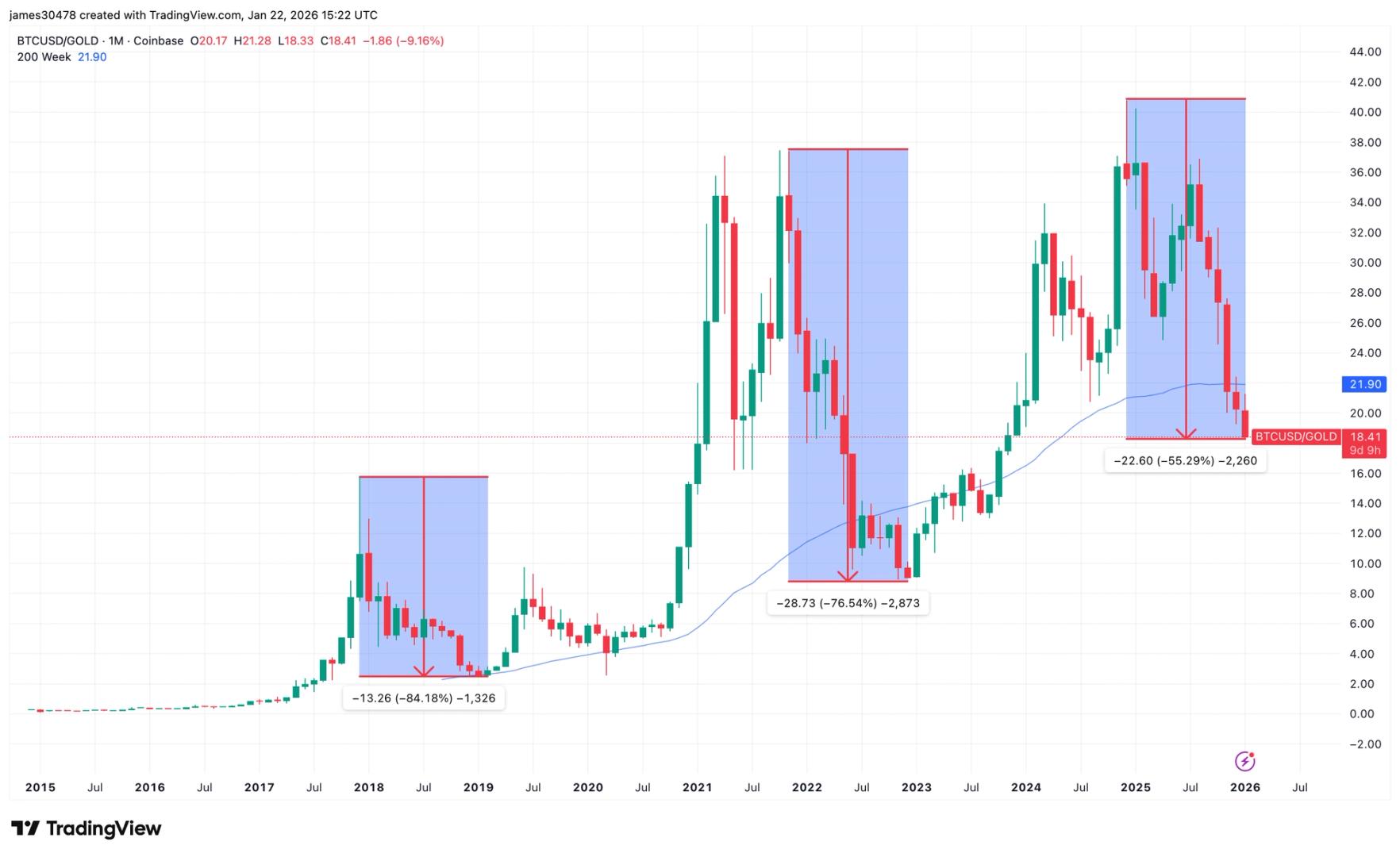
Bitcoin in a deep bear market against gold, history suggests downside may persist

Bitcoin falls bellow $89,000 as rally attempt fizzles despite trade war risk relief

Michael Saylor indicates more bitcoin purchases in change of pace mid-week tweet

XRP slides 19% from January highs, pushing sentiment to 'extreme fear'

BlackRock-linked wallets move over $430 million in bitcoin, ether to Coinbase Prime